
CATALYST
DENVER MUSEUM OF NATURE & SCIENCE ONLINE MAGAZINE
A New Approach to Deinstalling a Legacy Exhibition
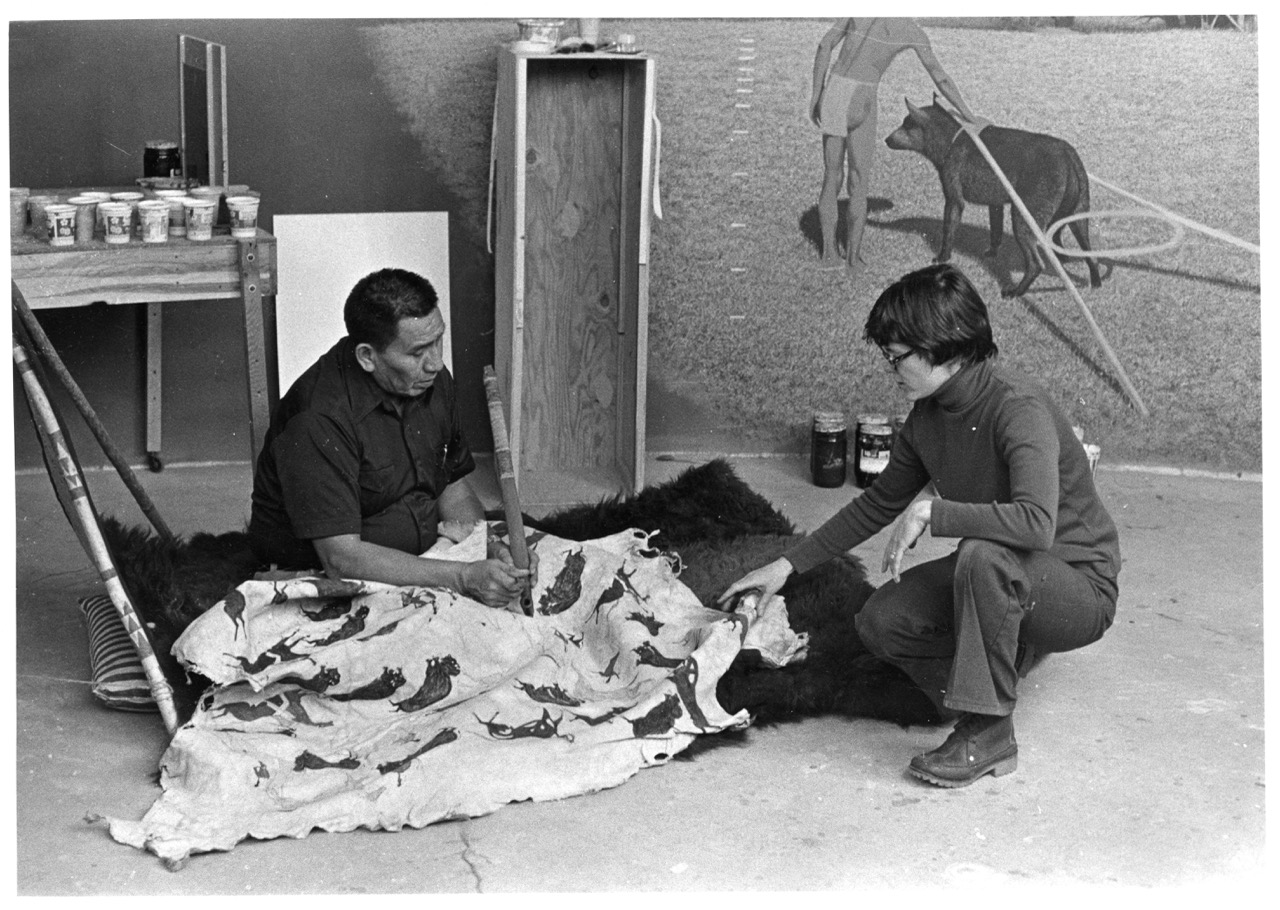
Richard Tallbull, Southern Cheyenne, and Joyce Herold, former DMNS curator, discuss exhibition components in the Cheyenne Diorama, a central exhibition in NAICH (Photo: Denver Museum of Nature & Science)
When the doors to the North American Indians Culture Hall (NAICH) closed to the public in June 2023, a massive behind-the-scenes project began for the Denver Museum of Nature & Science Anthropology Department. Since the closure, staff have been busy collaborating with community partners to deinstall — or remove objects from display, conserve and rehouse collections. As we near the end of this multi-year project, we wanted to share what the deinstallation process has involved.
In its final iteration, NAICH was home to roughly 1,000 Indigenous objects on display and 1,500 in adjacent storage spaces. These numbers indicated we had a big project ahead of us. Based on staff experience and community feedback, we chose to conduct this deinstallation differently, making the process nuanced and collaborative. From the beginning, our team crafted a workplan that sought input from Native communities regarding the care of their belongings.
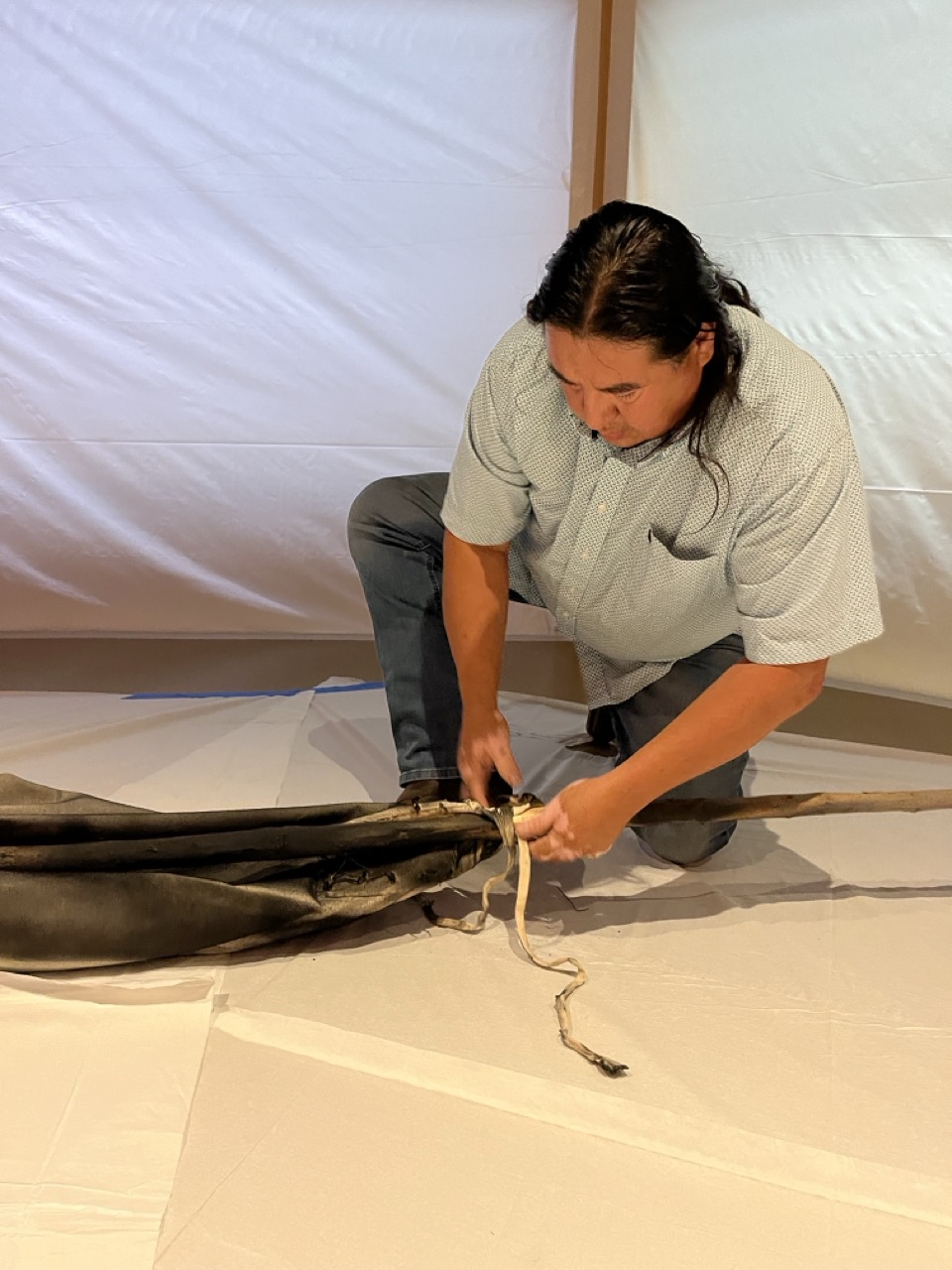
George Cutis Levi, Southern Cheyenne, helps deinstall the tipi from the Cheyenne Diorama in NAICH (Photo: Casey Mallinckrodt, Senior Conservator)
We began with reaching out to Tribal Historic Preservation Officers (THPOs), who are often the official Tribal liaisons authorized to make decisions around a Tribe’s cultural heritage. We invited THPOs to review objects on display and discuss how they would like to see their community involved in the deinstallation process. Through this consultation, we sought guidance on the culturally appropriate ways to care for a belonging — often called “cultural care” — and identified objects that might be eligible for repatriation.
More than 100 federally recognized Tribes were represented in the Hall. To date, we have sent approximately 194 letters and communications to these Tribes, receiving a 54% response rate. Tribes have provided guidance on how objects from NAICH should be handled and cared for, including requests that certain belongings be housed in natural materials, smudged to cleanse them or placed in culturally sensitive storage. Most Tribes have not required additional cultural care but have expressed interest in reviewing related collections in the future.
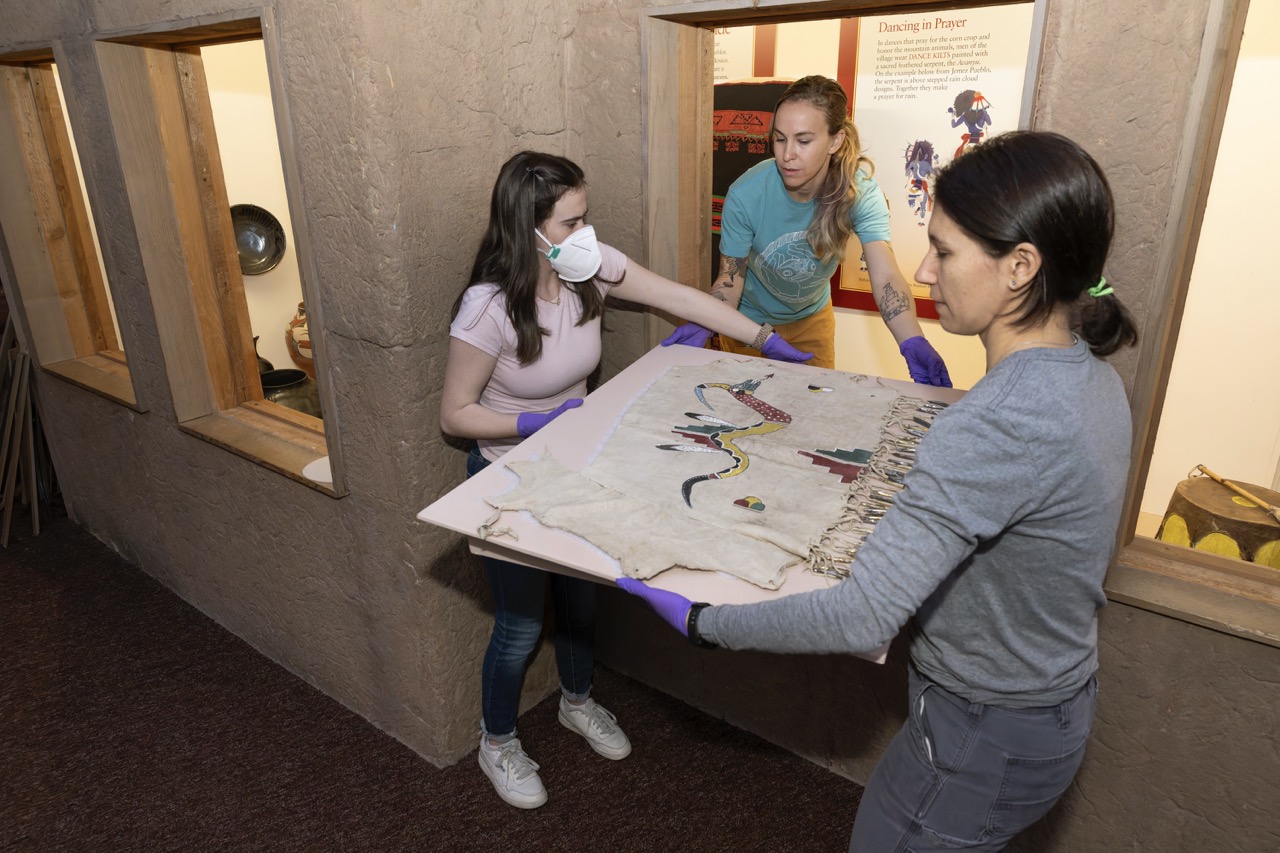
Collections and Conservation staff deinstall belongings from the Pueblo cases in NAICH. Left to right: Ella Thomas, Erika Heacock and Megan Salas (Photo: Rick Wicker)
Early consultation also provided time for THPOs to identify objects that may be eligible for repatriation under the Native American Graves Protection and Repatriation Act (NAGPRA). This law requires institutions receiving federal funds to consult with Tribes regarding the return of ancestral human remains and specific cultural belongings. To date, the Anthropology Department has consulted with 14 Tribes on NAGPRA-eligible belongings in NAICH. Two Tribes have requested the repatriation of cultural belongings, resulting in the return of nine objects to their communities.
As of March 2026, consultation is ongoing and remains part of our efforts as we move through the physical work of deinstallation. Deinstallation includes conducting a case assessment to determine how to safely access objects and their mounts, as well as to document the condition, stability and cultural care requirements for each object. On average, a team of four spends about one and a half hours deinstalling roughly 50 objects, carefully removing them from display, inventorying them and attaching barcode tags.
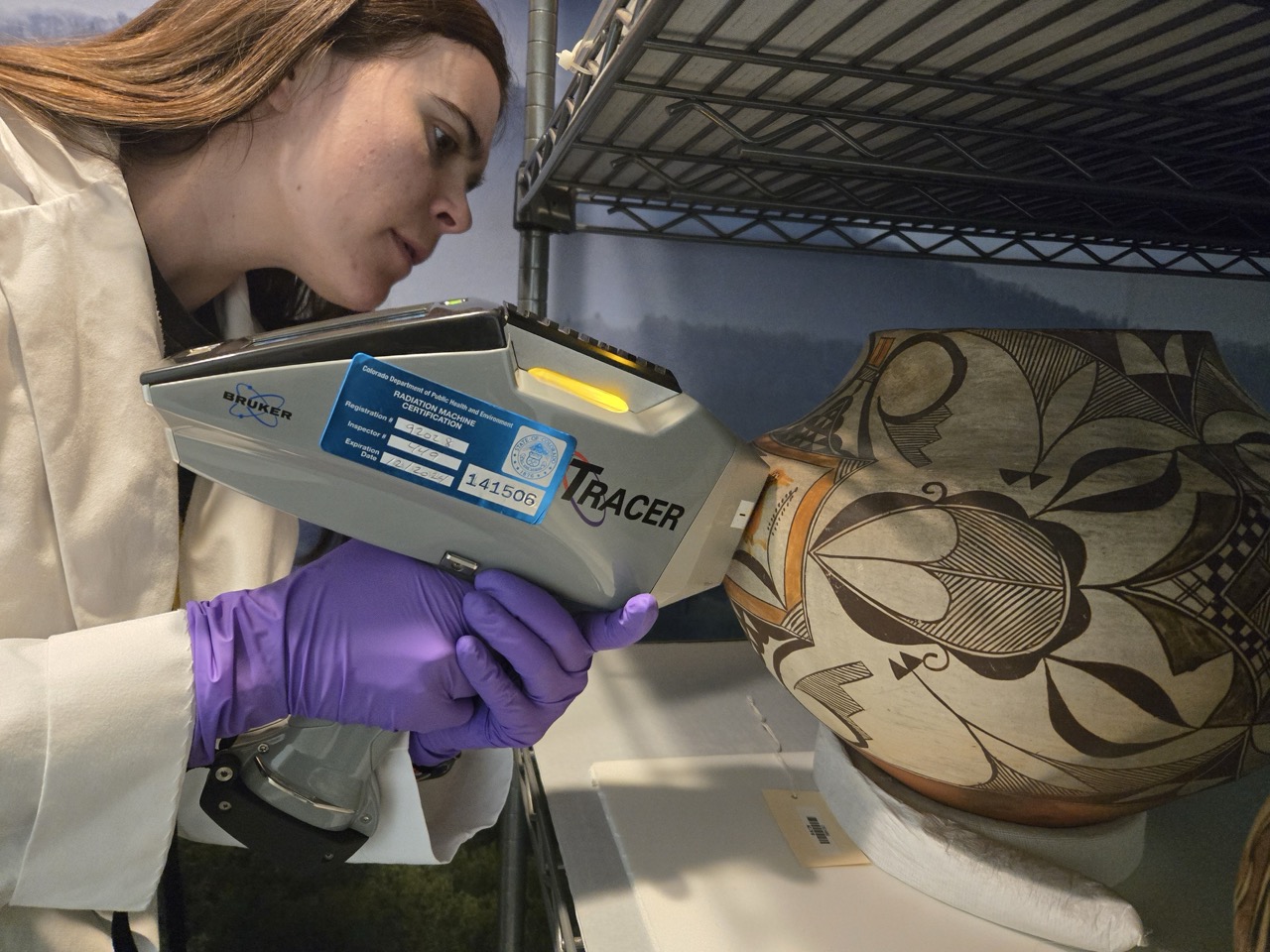
Conservation Technician, Ella Thomas, uses a portable XRF spectrometer to test for heavy metals (Photo: Erika Heacock, Assistant Collections Manager)
From there, conservators compile condition reports and photo documentation to record any instabilities.They also test for heavy metal pesticide residues using X-Ray Fluorescence (XRF) spectrometry to identify potential health hazards for future handlers. In the past, museum staff and collectors sometimes applied pesticides containing heavy metals to protect belongings from insects and deterioration, before the full risks to human health were widely understood.
Collections staff then 3D mount, label, barcode and assign permanent storage locations for each object. As of January 2026, 74% of NAICH has been deinstalled, conserved, rehoused and moved to our preservation area.
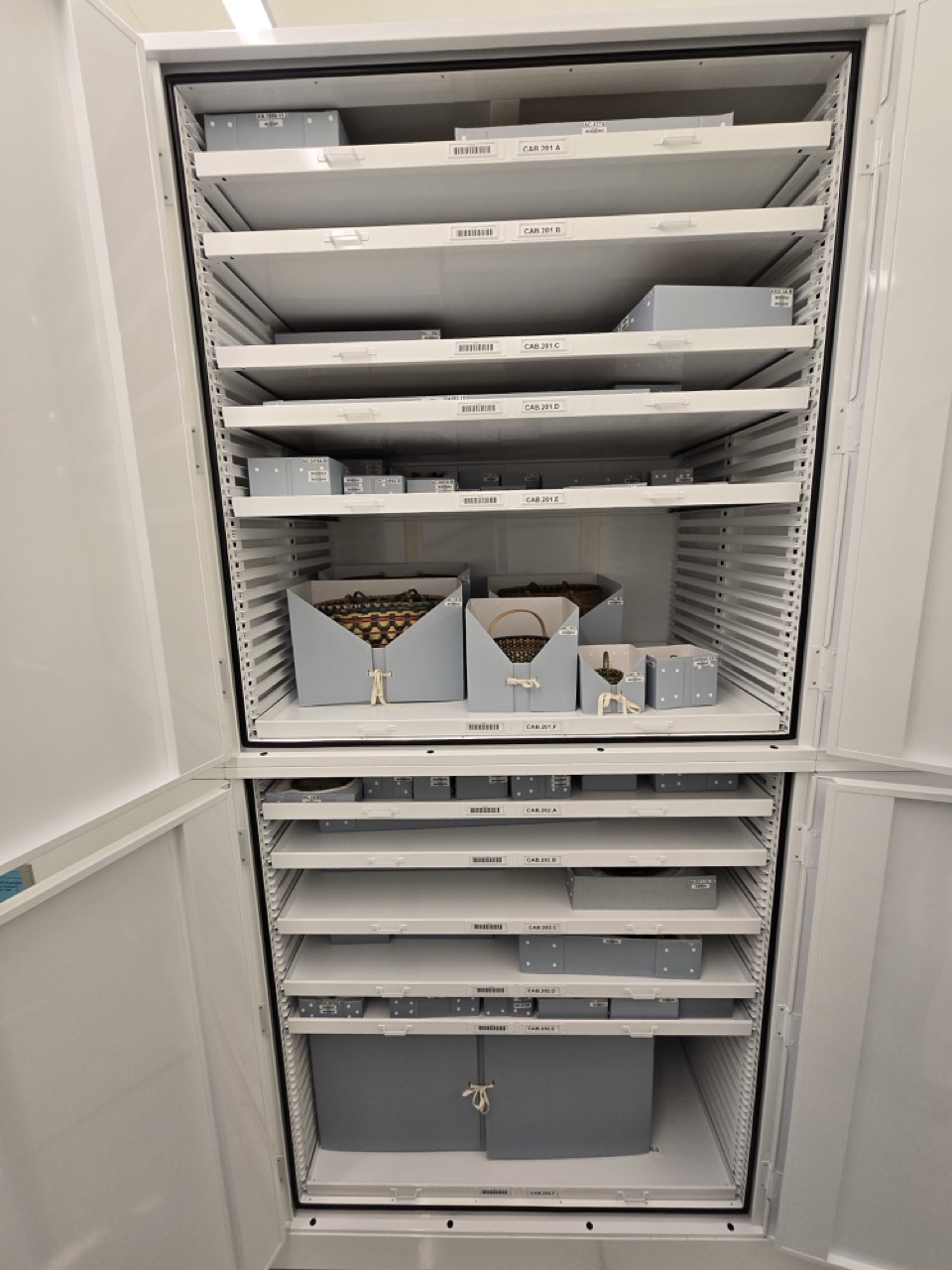
Belongings that have been 3D mounted and reused are stored in collections preservation within their respective cultural area (Photo: Erika Heacock, Assistant Collections Manager)
For our team, the deinstallation of NAICH has been about more than numbers and safely moving objects. It’s given us an opportunity to build community relationships, make Indigenous perspectives, expertise and cultural protocols central to decision-making and rethink how we care for cultural belongings. While the deinstallation is slated to be completed by the end of 2026, the collaborative practices developed through this project will continue to shape how we care for the collections in the years ahead.
Spring 2026
In This Edition
-
Is That Fossil Real?
How We Forge Faux Fossils in Earth Sciences
-
A 1938 Time Capsule: Jarre Canyon Diorama
-
A New Approach to Deinstalling a Legacy Exhibition
-
When Triceratops Dreams Come True
-
Our Gems & Minerals Hall Will Be Completely Renovated, Expanded by 50%
The Dea Family Gems & Minerals Hall: Unveiling Late 2027
-
2026 Symposium Tackles the Role of Politics & Policy in Science
-
Guest Curators Enrich Indigenous Textile Installations
Share this: