
CATALYST
DENVER MUSEUM OF NATURE & SCIENCE ONLINE MAGAZINE
A 1938 Time Capsule: Jarre Canyon Diorama
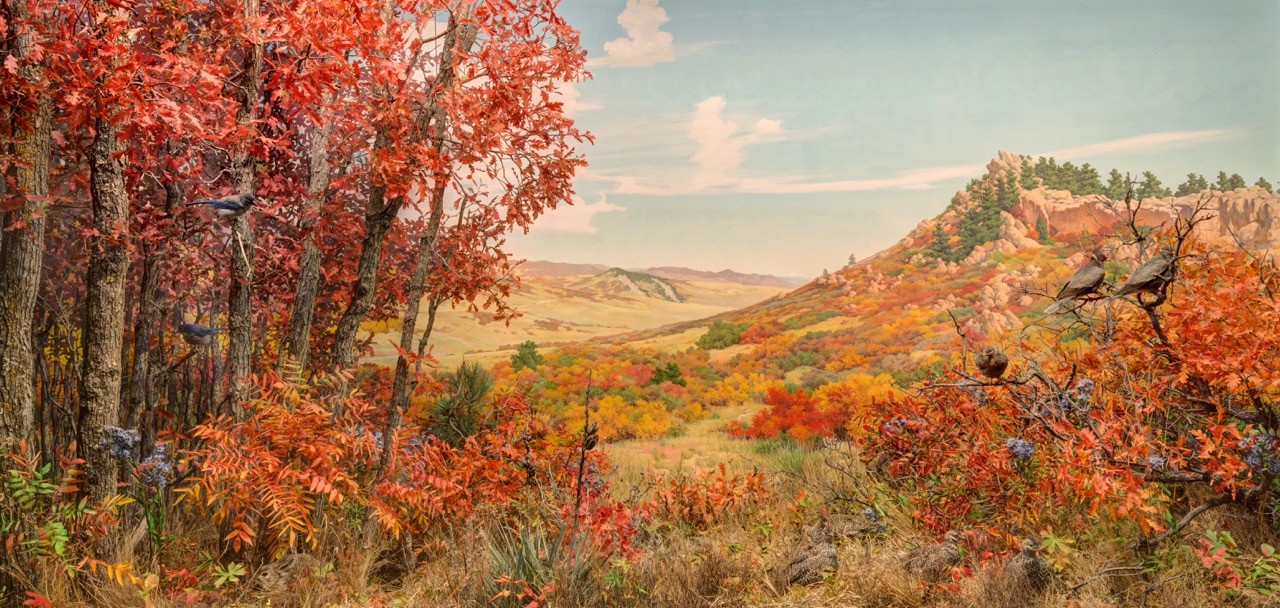
Jarre Canyon, Gamble Oak Diorama, Denver Museum of Nature & Science (Photo: Rick Wicker)
Step into the Explore Colorado hall at the Denver Museum of Nature & Science, and you will find yourself staring into a 1938 time capsule known as the Jarre Canyon diorama. This peaceful scene, located west of Sedalia, captures a world of craggy rock outcrops, vibrant autumn foliage and a bustling community of wildlife that seems perfectly content in its frozen moment of history. However, if you were to stand at that exact spot in the canyon today, you would realize that while the rocks have remained relatively still, the ecology of the area has been steadily but significantly shifting for the last ninety years.
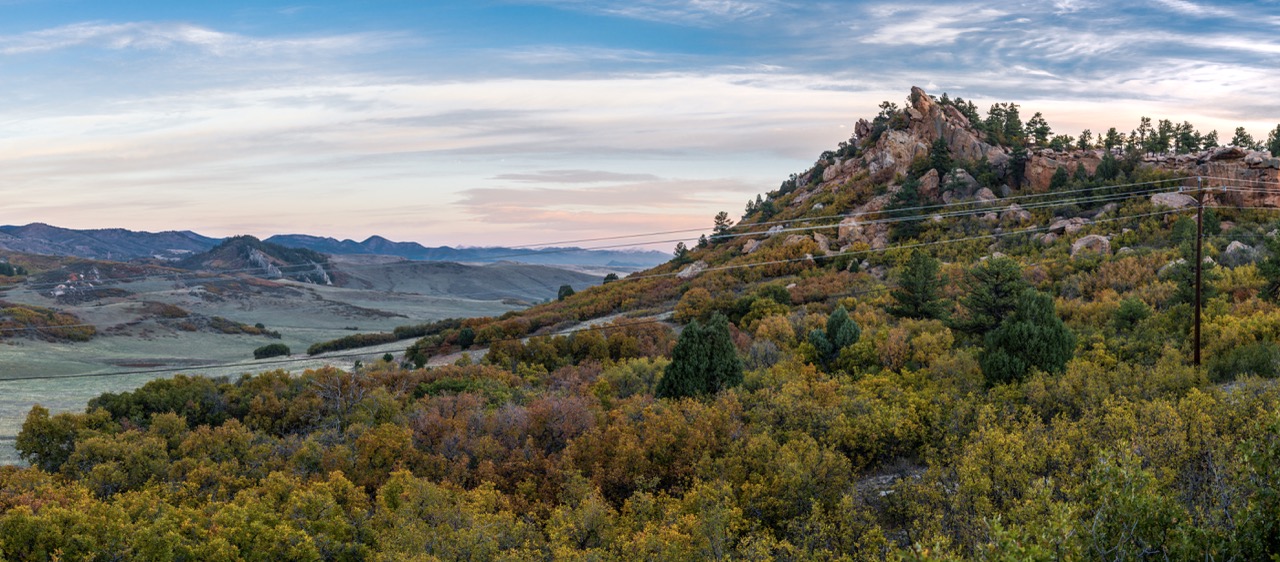
Jarre Canyon, present day (Photo: Evan Anderman)
The most dramatic change can be found in the local guest list, specifically among the feathered residents. In 1938, the Plains Sharp-tailed Grouse was a local regular, famous for its "rat-tat-tat" synchronized spring dance in which males would rattle their tail feathers and stomp their feet to impress a mate. These chicken-like birds were once common across the foothills, but have since become so rare that Colorado Parks and Wildlife now asks anyone who spots one to take a video and report it immediately.
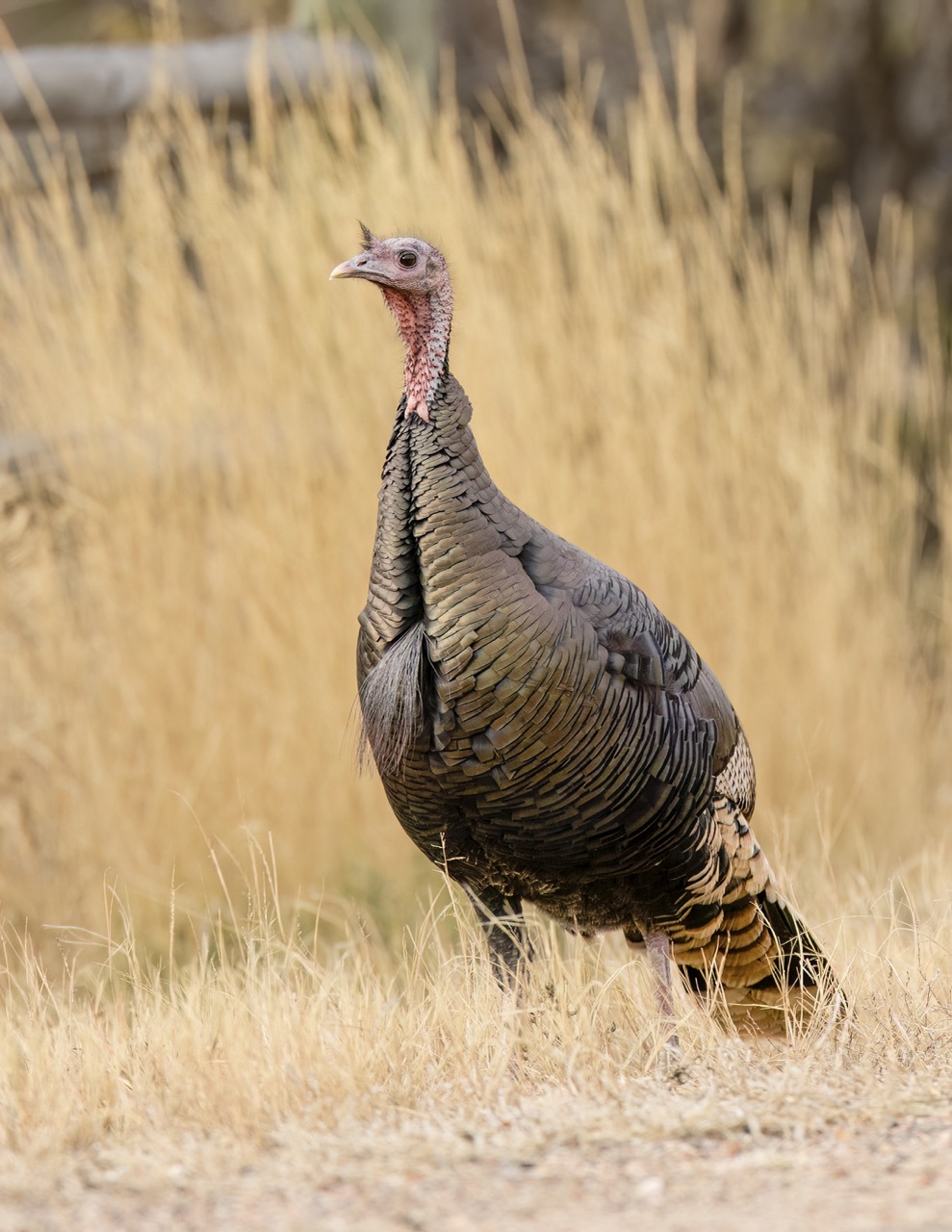
Merriam’s Turkey (Photo: Stu Smith)
While the grouse were making their exit, a new neighbor was moving in: the Merriam’s Turkey. Despite being a staple of the landscape today, local (human) residents report that these turkeys only began thriving in the canyon about ten years ago, feasting on the same acorns and berries that once supported other species. Even the Band-tailed Pigeons seen perched in the diorama have changed their travel plans; where flocks of 100 or more were once common after nesting season, they are now seen primarily as seasonal tourists passing through during migration.
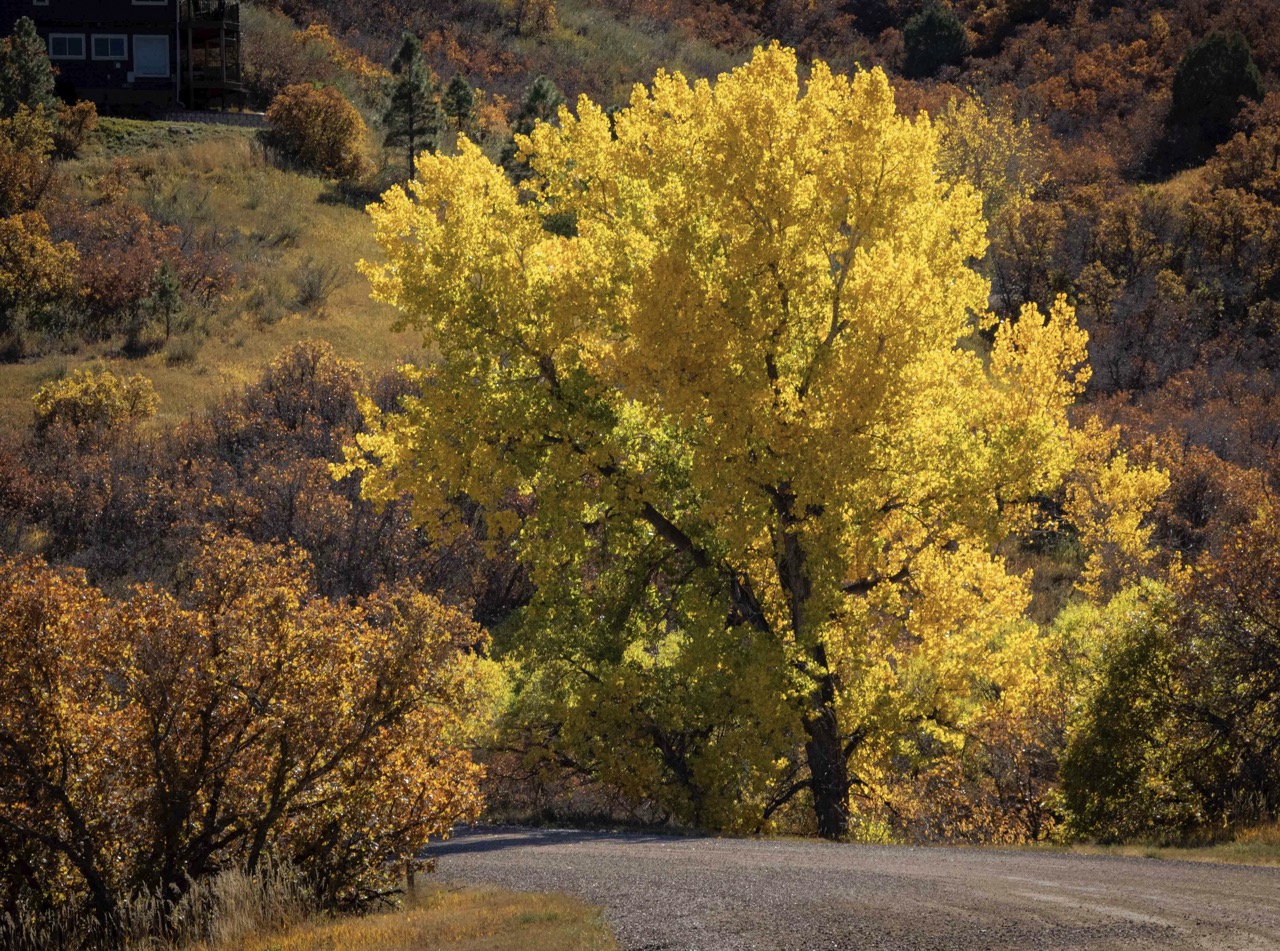
Gambel Oak, Jarre Canyon (Photo: Karen Fiant)
This shift in wildlife is closely tied to the changing fate of the landscape's star attraction: the Gambel oak. In the diorama, these oaks—also called scrub oak—frame the scene in a fiery display of reds and golds, serving as the essential "keystone" of the ecosystem. To local wildlife, the oak is a provider, offering acorns for bears and deer and acting as a vital host for the Colorado hairstreak butterfly. Its massive root system is a hidden hero, stabilizing the canyon's slopes against erosion. Yet, for the humans who have built homes in the canyon since 1938, the Gambel oak is a "green frenemy." Its dense foliage is loaded with highly flammable oils that can cause flames to spread with terrifying speed. Because of this fire risk, much of the oak and sumac seen in the original 1938 painting has been thinned or removed near modern roads and houses to prevent wildfires from "jumping" into nearby junipers.
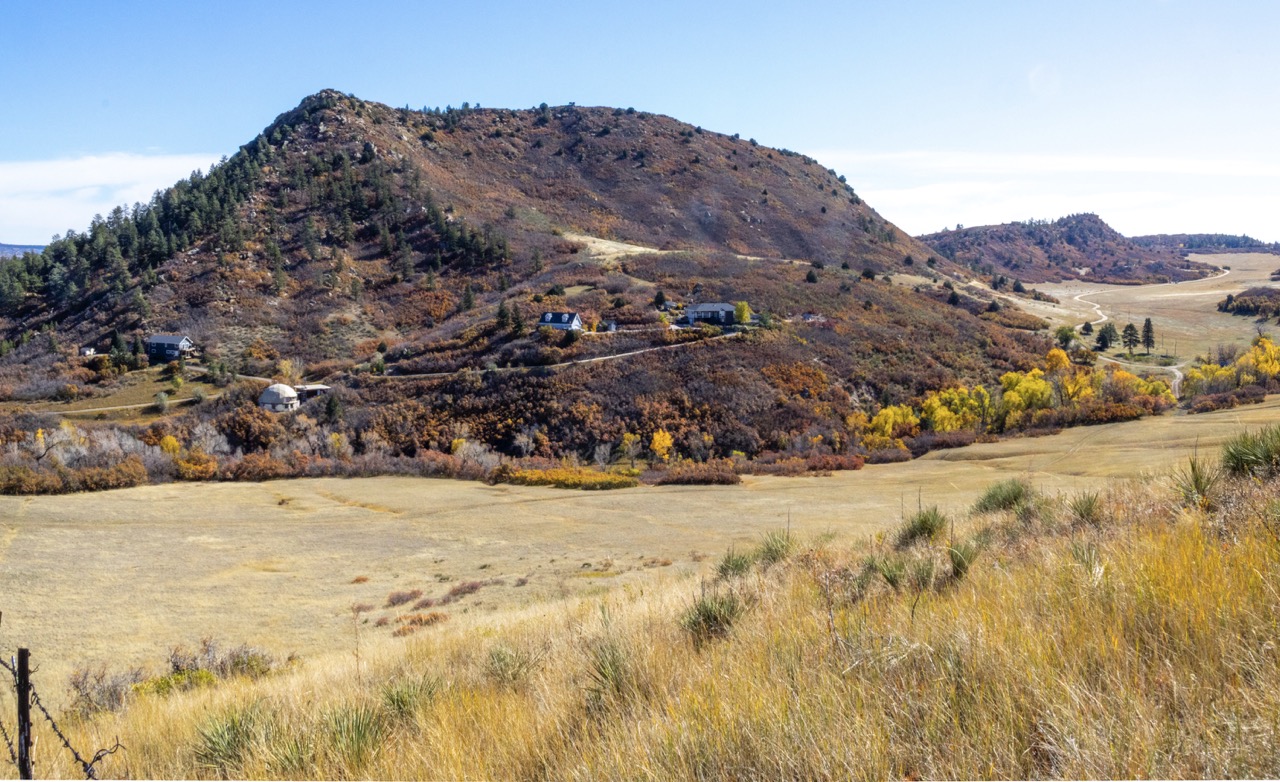
Jarre Canyon, present day (Photo:Wendy Shattil)
As humans have manicured the vegetation for safety, they have also left other unmistakable marks on the landscape, from the telephone wires crisscrossing the sky to the wider roads that now carry speeding cars past the old ranchlands. This expansion has created a hidden tension beneath the surface of the soil. The prominent rock ridge in the diorama, Wildcat Mountain, acts like a giant, stony sponge, allowing rainwater to seep into the ground to recharge the Arapahoe aquifer. This underground reservoir provides the delicious well water that allows modern residents to live in such a beautiful, rugged place. However, because the population has grown so significantly since the diorama was completed, humans are now "mining" this water faster than the slow percolating rains can replace it, causing the aquifer to deplete.
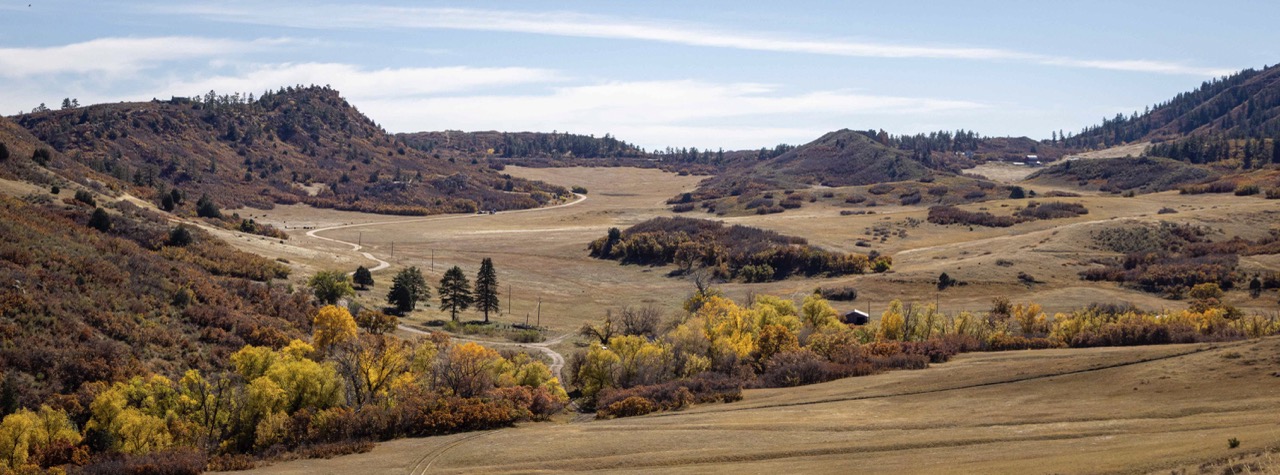
Jarre Canyon (Photo:Karen Fiant)
Ultimately, the Jarre Canyon diorama serves as a beautiful but sobering benchmark of our changing world. It reminds us that an ecosystem is not a static painting, but a living relationship in which every part depends on the others. The disappearance of the dancing grouse, the arrival of the turkeys and the careful thinning of the flammable oaks all reflect the reality of a landscape that is now shared with a growing human population. Perhaps then, we might look at the diorama as an invitation –not just to observe, but to help protect the future of this ever-evolving canyon.
With special thanks to
Photographers: Wendy Shattil, Karen Fiant, Stu Smith
Geologists: Sandy Stavnes, Tom Loucks, Scott Gaffri
Spring 2026
In This Edition
-
Is That Fossil Real?
How We Forge Faux Fossils in Earth Sciences
-
A 1938 Time Capsule: Jarre Canyon Diorama
-
A New Approach to Deinstalling a Legacy Exhibition
-
When Triceratops Dreams Come True
-
Our Gems & Minerals Hall Will Be Completely Renovated, Expanded by 50%
The Dea Family Gems & Minerals Hall: Unveiling Late 2027
-
2026 Symposium Tackles the Role of Politics & Policy in Science
-
Guest Curators Enrich Indigenous Textile Installations
Share this: