CATALYST
DENVER MUSEUM OF NATURE & SCIENCE ONLINE MAGAZINE
Museum Fossils and Science Tour in Japan
How the Museum’s World-Class Dinosaur Extinction Fossils Traveled Across the Pacific
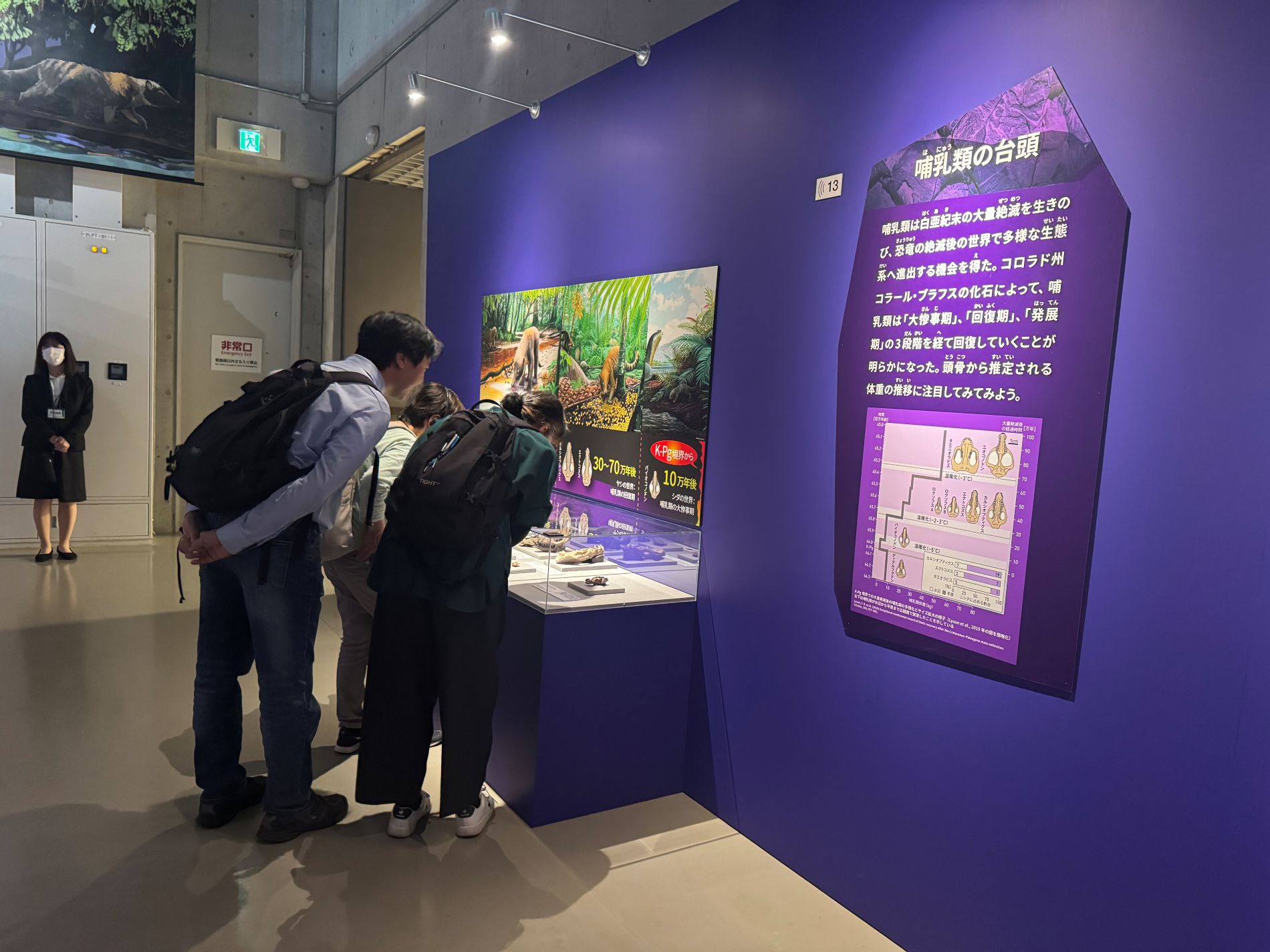
Guests of the National Museum of Nature & Science in Tokyo Japan viewing the cases that house the DMNS fossils. Over 50 fossils and casts that span the Cretaceous/Paleogene mass extinction event are on display. (Photo/ Tyler Lyson)
Over the past 40 years, the Denver Museum of Nature and Science has made major scientific contributions to understanding the end-Cretaceous mass extinction event. One of the planet’s most far-reaching extinction events, the end-Cretaceous mass extinction was caused by an asteroid that struck the Earth, causing the dinosaurs to go extinct some 66 million years ago. Not only do we study the mass extinction event, but we have also explored how and when ecosystems recovered in the post-apocalyptic world. Museum scientists have collected thousands of plant and vertebrate fossils from this interval of time, including the incredible Corral Bluffs Colorado fossil record, which documents the first million years of ecosystem recovery after the end-Cretaceous mass extinction.
Read more: Uncovering the Mysteries of Mammals
Recently, colleagues at the National Museum of Nature and Science in Tokyo, Japan, reached out about showcasing several of these fossils in a traveling exhibition, “Big 5 Mass Extinctions.” The exhibition takes guests on a journey through the last 450 million years of Earth’s history by exploring the five mass extinctions. The fifth Cretaceous/Paleogene (K/Pg) mass extinction that ended the reign of the dinosaurs is detailed by our collection as well as any on the planet.
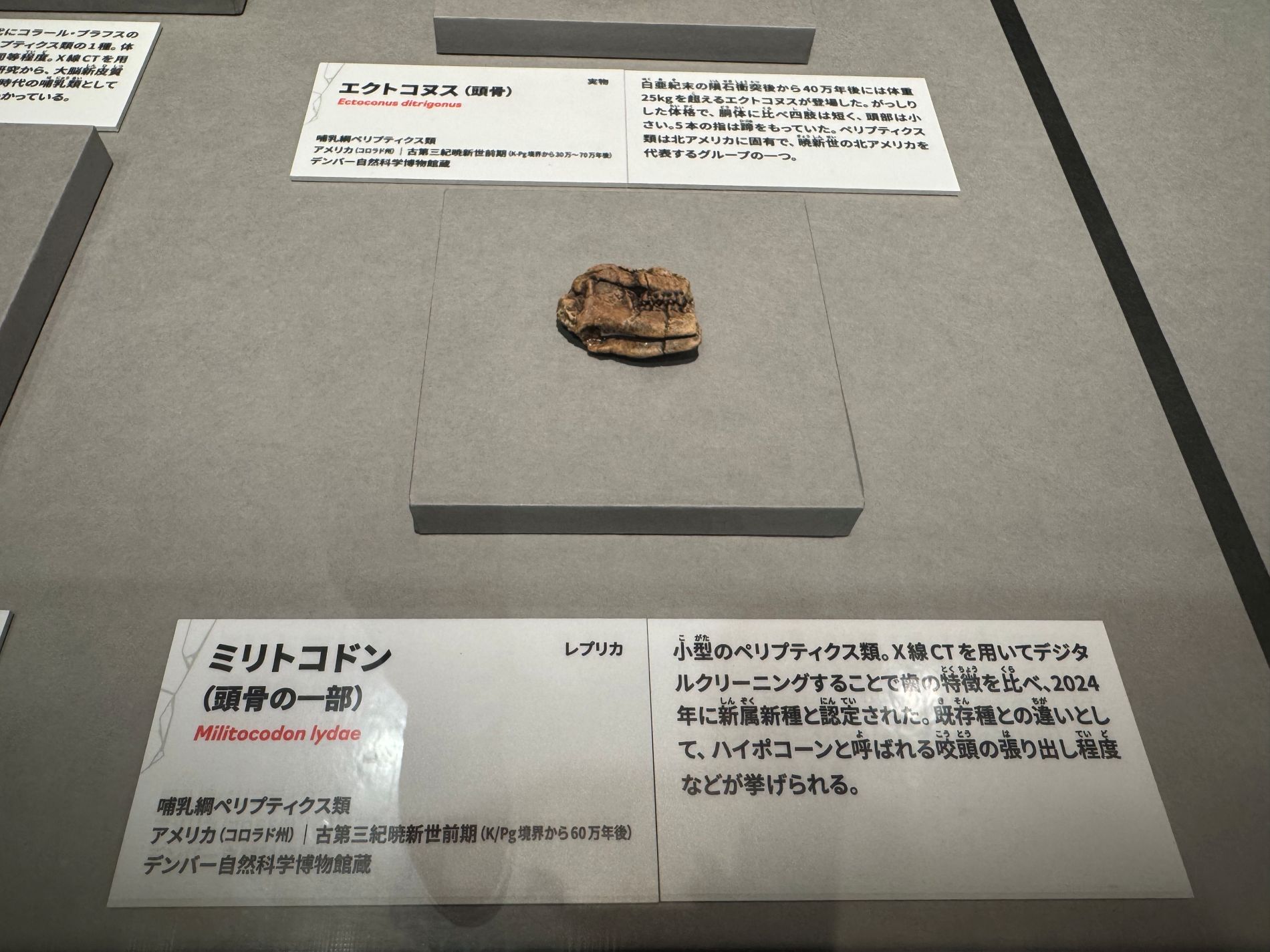
Cast of the recently named fossil mammal from Corral Bluffs, Militocodon lydae, is on display at the National Museum of Nature & Science in Tokyo, Japan. (Photo/ Tyler Lyson)
This was an exciting opportunity to reach new and diverse audiences and to use our science to help Japanese colleagues build a stronger exhibition — not one I wanted to miss! So, in coordination with Museum leadership, my fellow Earth Science curators, collections managers and registrar, we worked with colleagues at the National Museum of Nature and Science in Tokyo to select fossils that best told the story of extinction and recovery.
We also had to make sure the fossil specimens were robust enough to be shipped safely across the Pacific Ocean. In addition to real fossils, we also sent 3D prints of some of the vertebrate fossils, which involved the Digital Research Laboratory, who scanned and printed the fossils and the fossil preparation lab, who expertly painted the 3D prints, creating hyper-realistic models. Finally, this summer and fall, our collections and fossil preparation teams worked together to make protective cradles for several of the larger fossils and foam cavity mounts for the smaller specimens. One large crate was expertly packed with fossils by the collections team and their volunteers, and the crate was loaded onto a cargo plane for a direct flight to Tokyo.
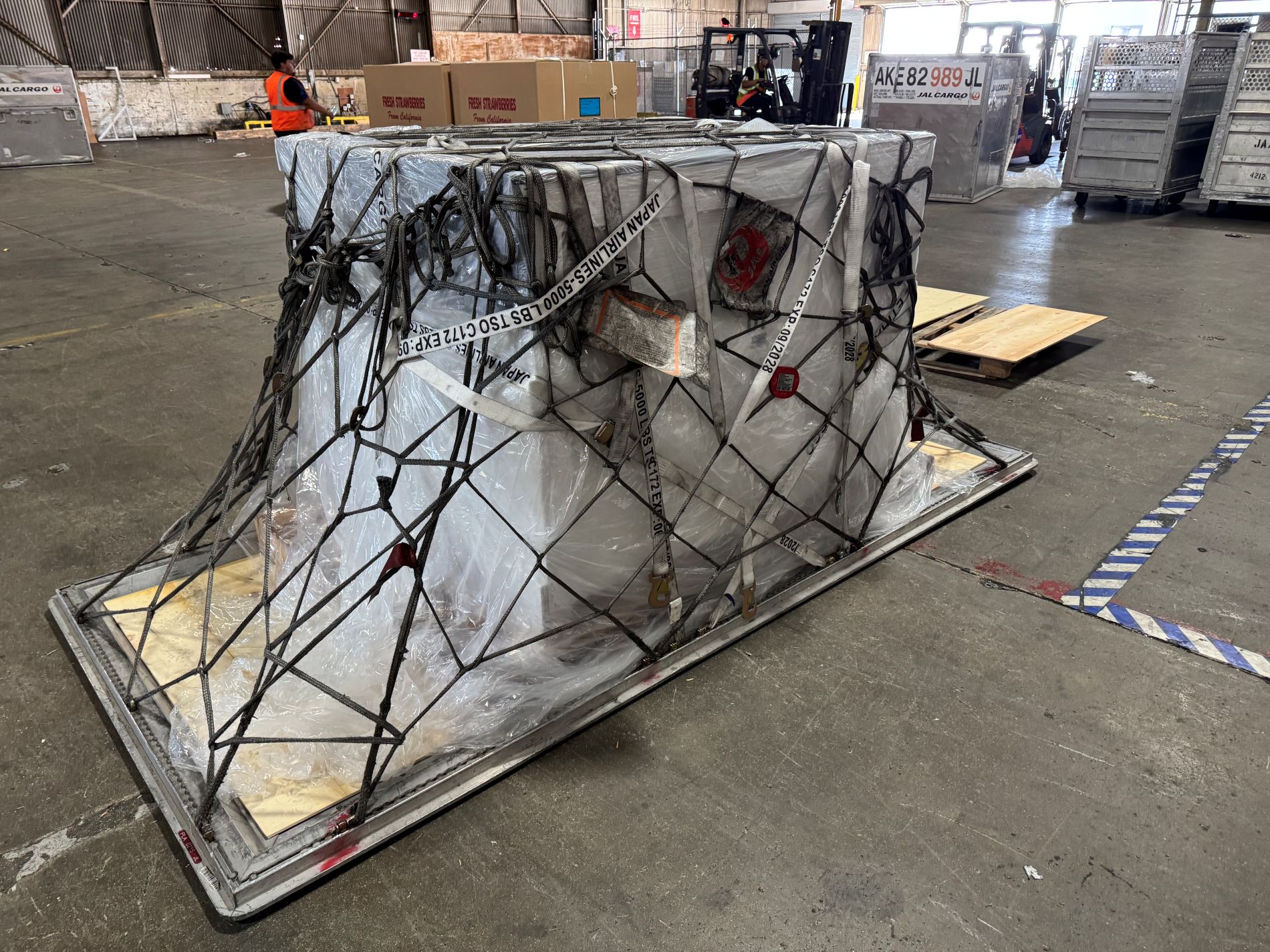
Denver Museum of Nature & Science fossils sit safely inside a crate, which is netted and ready to be loaded onto a cargo plane for a direct flight to Japan. (Photo/ Bridget Campos)
In late October, Fossil Preparator Salvador Bastien and I flew to Tokyo to install the Denver fossils and join the opening ceremonies for the “Big 5 Mass Extinction” exhibition. The installation was seamless, and the exhibition opening was a huge success with over 105 reporters present on opening day. The exhibit saw just under 27,000 people in the first week that it was open to the public.
Over the next year, the exhibition will tour through three Japanese cities. It will stay at the National Museum of Nature and Science in Tokyo until the end of February 2026, then move to Nagoya from March through July, and finally to Osaka for July through October. After the exhibition’s run across Japan, the fossils will return home to Denver. Organizers of the exhibition anticipate an estimated 400,000 museum guests will visit and see the Denver Museum fossils over the course of the coming year.
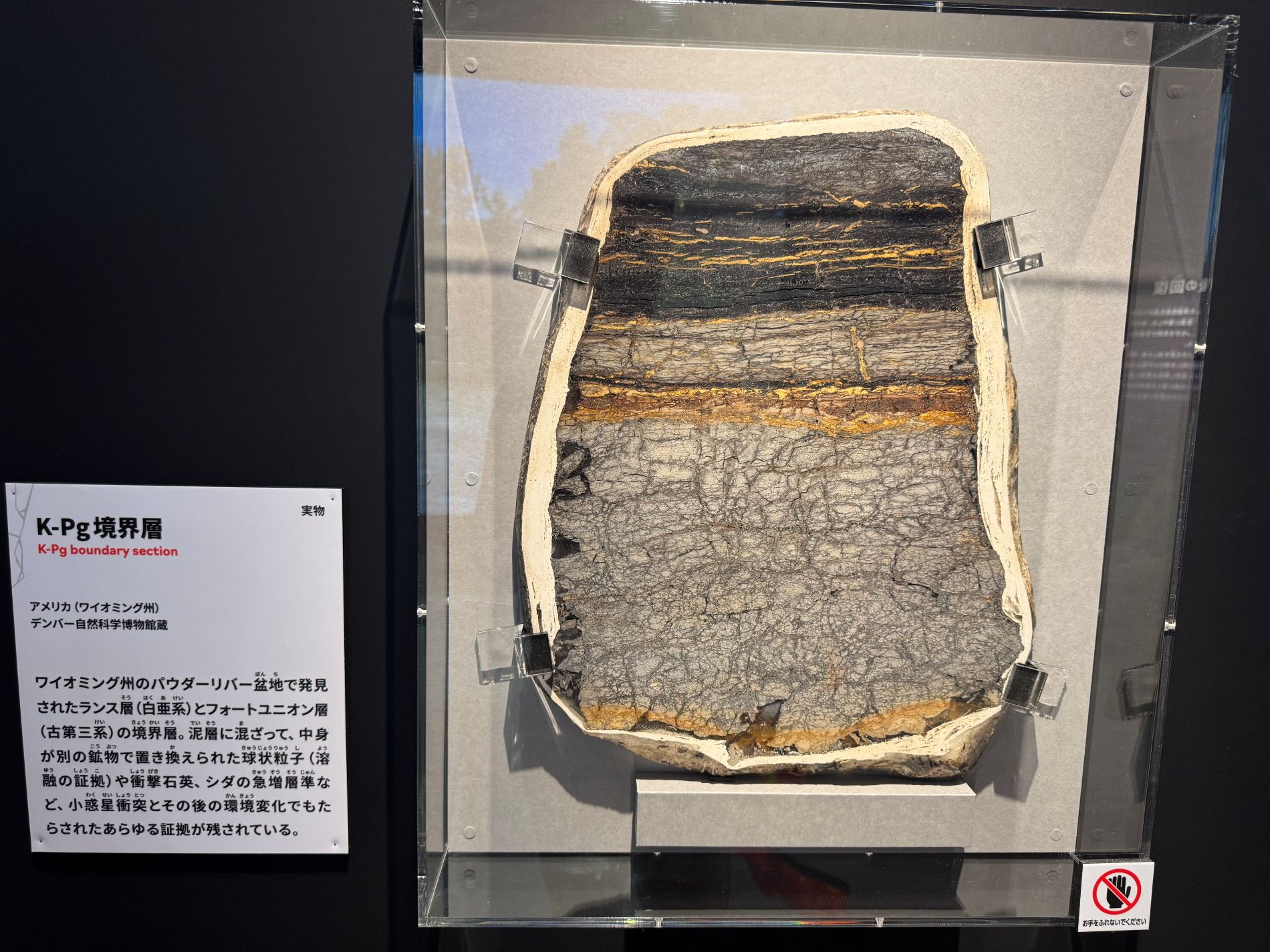
A Cretaceous/Paleogene boundary section collected in Wyoming and cut at Lyons Sandstone Quarry was loaned to the National Museum of Nature & Science in Tokyo, Japan where it will be displayed through February 2026. (Photo/ Tyler Lyson)
This project took a village to complete, and it highlights the collaborative and nimble nature of our institution. Contributions from many staff and volunteers outside of their day-to-day duties came together to put these fossils on the road this fall. Ultimately, decades of support for fieldwork, preparation, cataloguing and research went in to building a world class K/Pg fossil collection fit to display on the other side of the world. Projects like this, that share science from our backyard with the world beyond our doors and borders, are essential as the Denver Museum of Nature & Science grows on the international stage.
Watch an interview from Tokyo with Dr. Tyler Lyson and Salvador Bastien discussing Denver Museum of Nature & Science specimens on tour in Japan: