CATALYST
DENVER MUSEUM OF NATURE & SCIENCE ONLINE MAGAZINE
10 Majestic Felines and Their Unique Adaptations
Discover Where to Find These Legends at the Denver Museum of Nature & Science
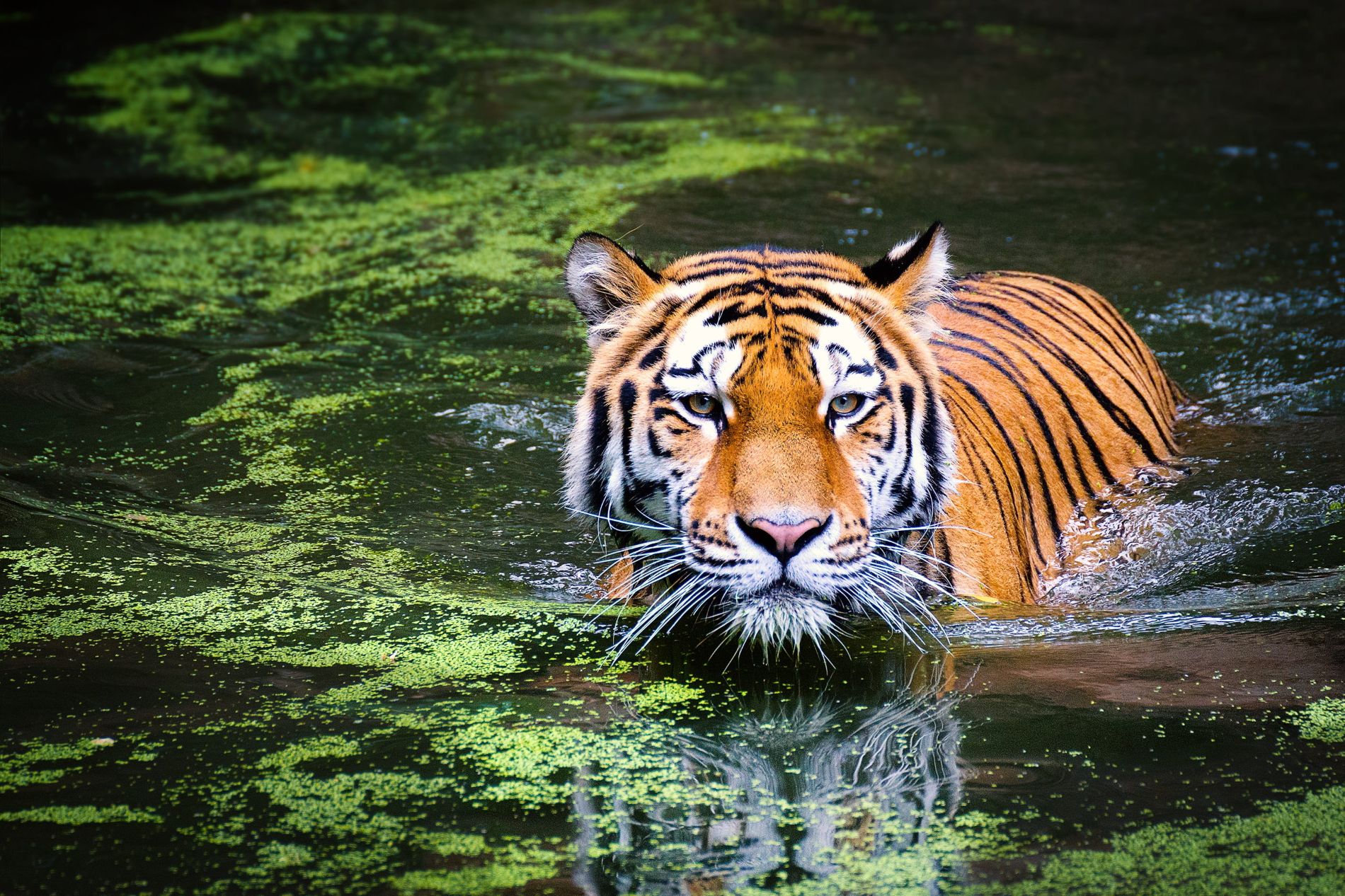
A Bengal tiger swims across water with algae. (Photo/ ignartonosbg via Pixabay)
Cats are amazing creatures that enrich our lives and the planet we share with them. Certain cats we live with and consider family, others we run away from as soon as we spot one. In many cultures, cats are symbols of grace, power and untamed beauty.
Found in our own homes and in various habitats around the world, feline predators possess remarkable adaptations that enable them to thrive in their respective environments. Join us as we explore the world of 10 majestic cats, with further science and facts from our Curator of Zoology Garth Spellman.
African Lion (Panthera leo):

A pride of lions depicted in a diorama in the Botswana Hall on the third floor. (Photo/ Taran Volckhausen)
Distribution: Sub-Saharan Africa
Museum Location: Botswana, Third Floor Wildlife Halls
Unique Adaptation: The kings and queens of the jungle are considered the only social cats living in prides. This adaptation allows them to work together for hunting, protecting their territories and raising their cubs, making them formidable hunters and rulers of the savanna. Although most lions live in Sub-Saharan Africa, there is a subspecies of lion currently living in India.
Snow Leopard (Panthera uncia):
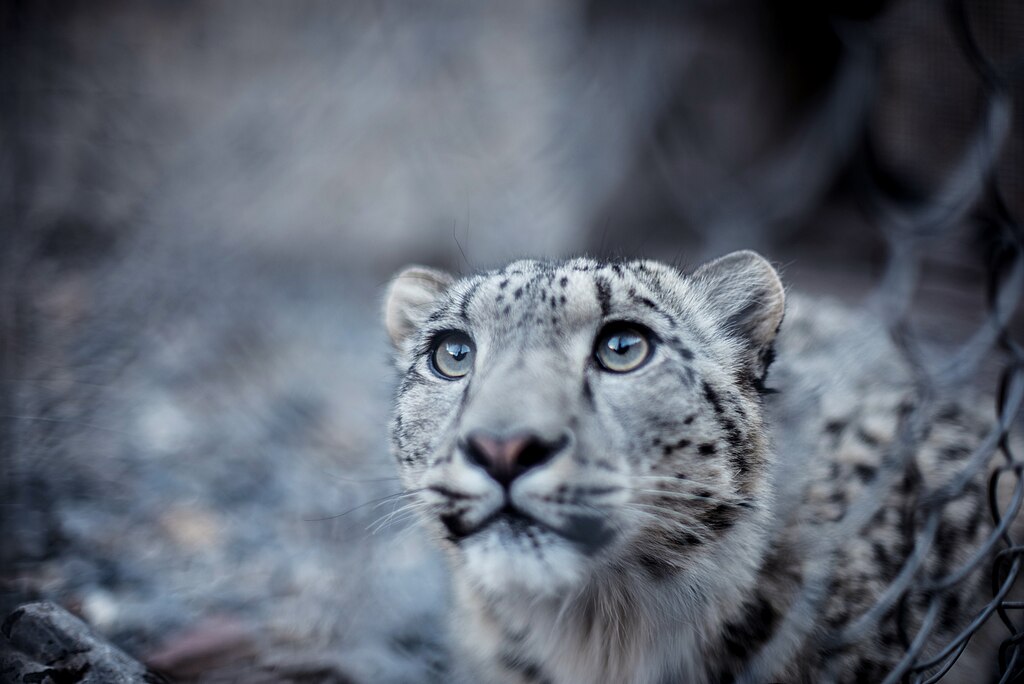
A snow leopard in Khunjerab National Park in 2014. (Photo/ Haseebamjad88 via Wikimedia Commons)
Distribution: Central and South Asia
Museum Location: Zoology Collections, Avenir Collections
Unique Adaptation: Snow leopards are gorgeous animals that are perfectly adapted to their high-altitude mountainous habitats. Their thick, insulated fur, wide paws for snow-walking and long tail for balance make them elusive and agile hunters in steep terrain. Although their names say “leopard,” this animal is more closely related to a typical tiger. Interestingly, snow leopards cannot roar and rely on other methods of communication.
Learn more about the Avenir Collections.
Cheetah (Acinonyx jubatus):
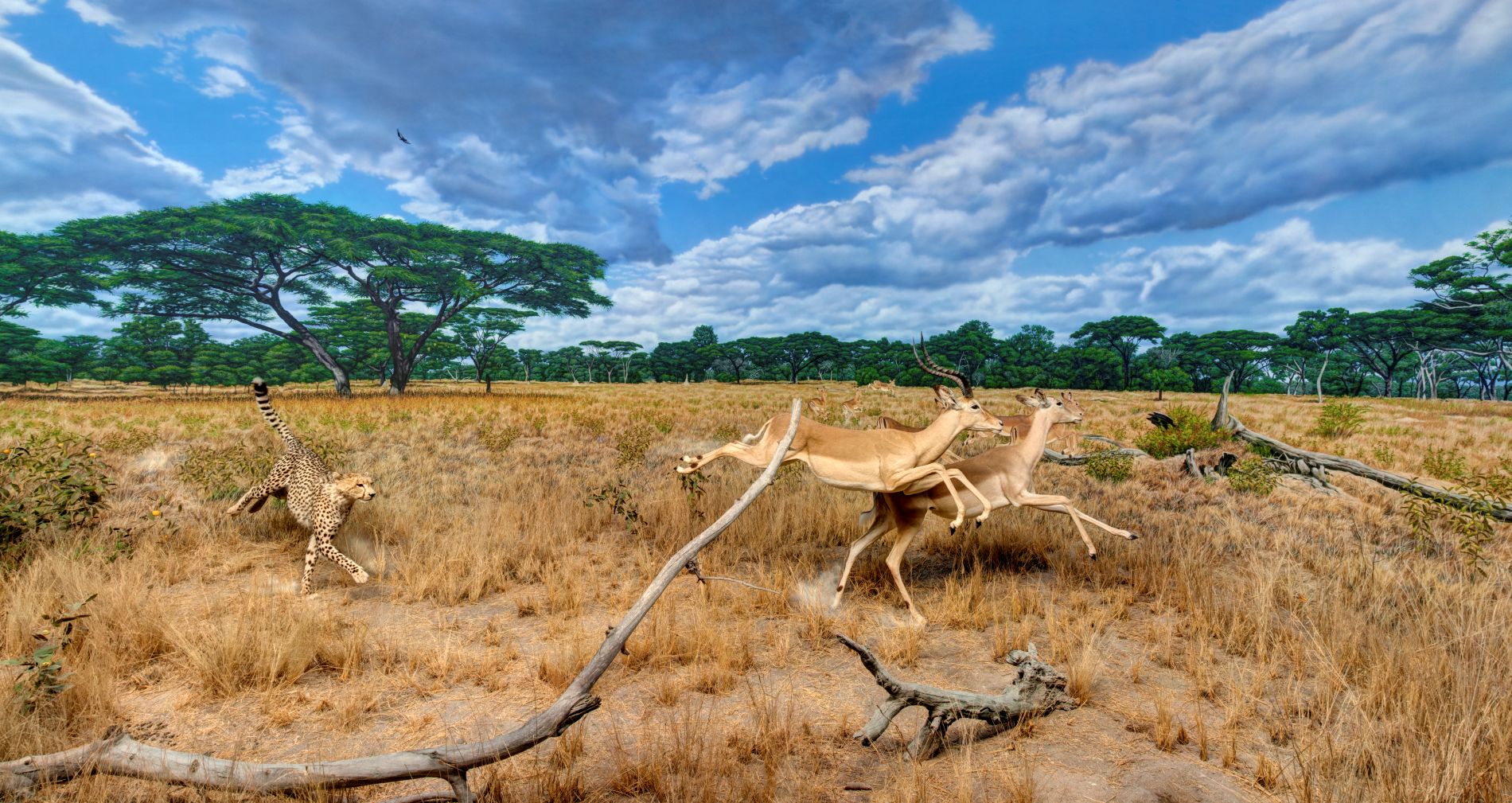
Panoramic view of Cheeta Impala Diorama, also known as the "Will the Cheeta Catch the Impala?," in Botswana Hall. (Photo/ Rick Wicker)
Distribution: Sub-Saharan Africa, Iran
Museum Location: Botswana, Third Floor Wildlife Halls
Unique Adaptation: Known for their incredible speed, cheetahs are the fastest land animals on Earth. Their slender body, lightweight build and non-retractable claws provide stability and traction during high-speed pursuits. Cheetahs can reach speeds of up to 75 miles per hour. Blink, and you will miss this speed demon!
Jaguar (Panthera onca):

Jaguar, found in North, Central and South America, in 1970. (Credit/Joe Van Wormer)
Distribution: Central and South America
Museum Location: Zoology Collections, Avenir Collections
Unique Adaptation: Jaguars are powerful swimmers and often inhabit wetland areas. Their strong jaws and muscular build enable them to seize and carry prey across water bodies with ease, making them formidable apex predators. Relative to its size, jaguars have the strongest bite out of all the cats in the kingdom.
Caracal (Caracal caracal):
Distribution: Africa, Middle East, Central Asia
Museum Location: Zoology Collections, Avenir Collections
Unique Adaptation: Caracals possess distinctive tufted ears, which serve as sensitive receptors for detecting prey and communicating with other caracals. These tufts also provide camouflage, blending them with their surroundings.
Canada Lynx (Lynx canadensis):
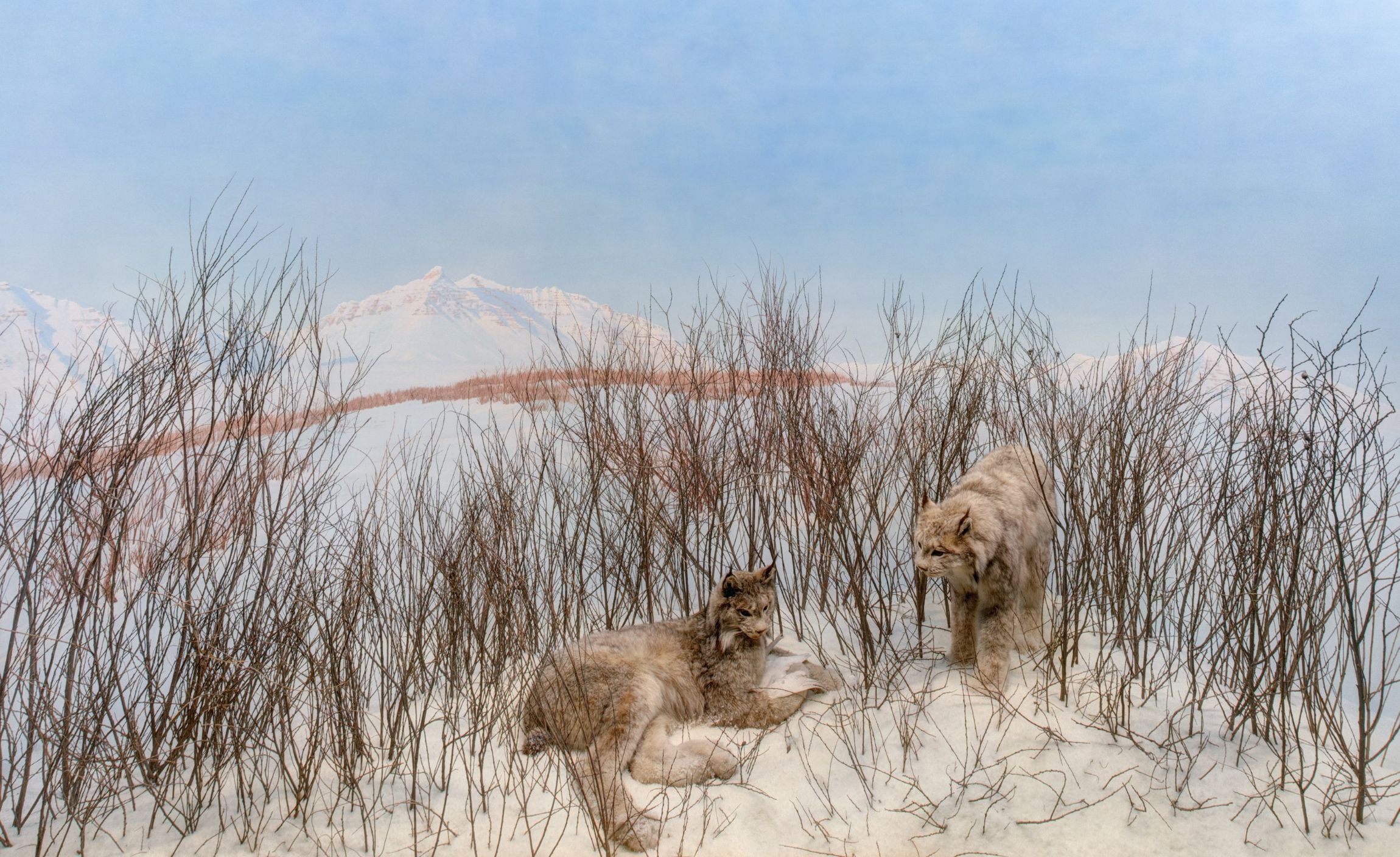
Canada Lynx diorama in Wildlife Halls. (Credit/Rick Wicker)
Distribution: North America
Museum Location: Second Floor Wildlife Halls
Unique Adaptation: Canadian lynx are highly adapted to hunting snowshoe hares, which make up a significant part of their diet. They have exceptional eyesight and can detect the slightest movement of their prey beneath the snow. Earning the name of lynx, the name stems from Greek origin meaning “to shine,” referencing the reflective nature of its eyes.
Saber-tooth Cat (Smilodon fatalis):
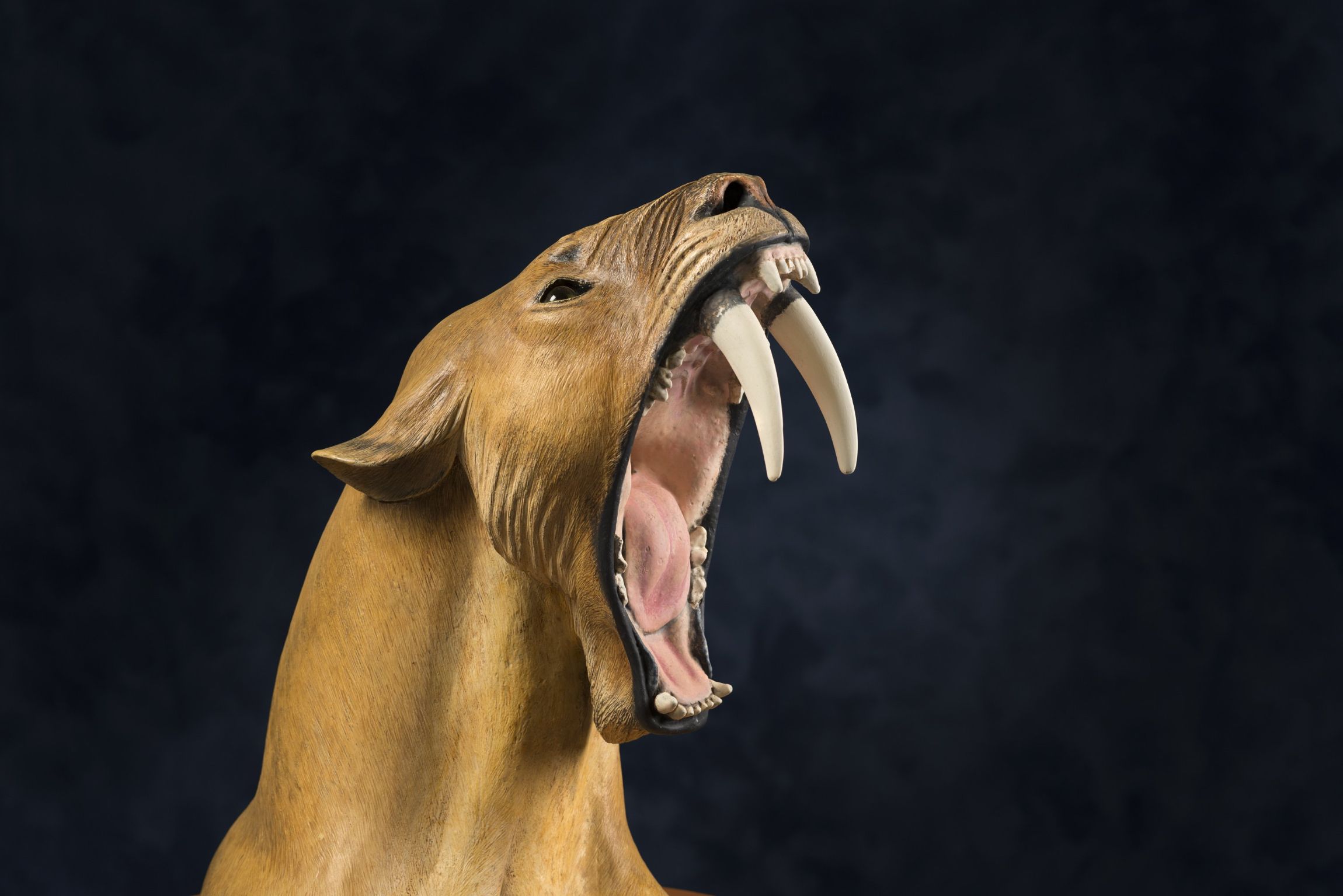
Scale model of Saber-toothed cat mounted on wooden base for coin donations at the Denver Museum of Nature & Science. (Credit/Rick Wicker)
Distribution: Worldwide
Museum Location: First Floor, Main Museum Atrium
Unique Adaptation: One of the most distinctive features of the saber-tooth cat was its pair of long, curved canine teeth, also known as sabers. These teeth could reach up to seven inches, far longer than those of any modern-day cat. The precise purpose of these impressive canines has been the subject of much scientific debate.
Rusty Spotted Cat (Prionailurus rubiginosus):
Distribution: Southern India and Sri Lanka
Museum Location: Not found in Museum collections
Unique Adaptation: The Rusty Spotted Cat is considered the world’s smallest cat, being half the size of a normal domestic cat. It has exceptional agility and climbing abilities. Despite its small size, this cat is an adept tree climber, using its sharp retractable claws and flexible body to navigate through branches with ease. Its nimbleness allows it to access prey in trees, escape from potential threats and explore diverse habitats, including forests, grasslands and scrublands.
Bengal Tiger (Panthera tigris tigris):
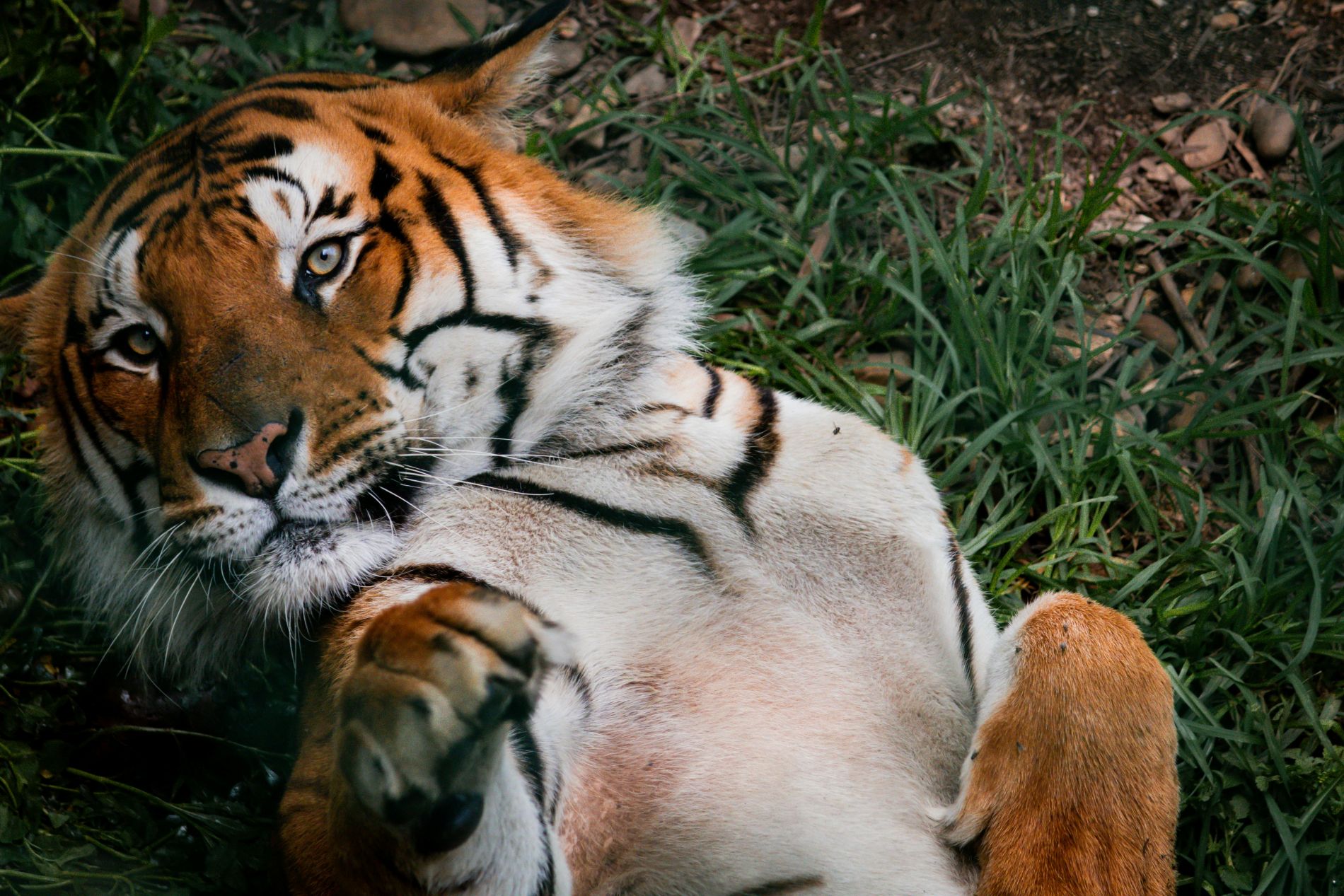
A relaxed Bengal tiger rests in the grass. (Photo/ Shiro Yasha0_o)
Distribution: Indian subcontinent, Bangladesh, Nepal
Museum Location: Not found in Museum collections
Unique Adaptation: The Bengal Tiger boasts exceptional swimming skills, enabling it to navigate through rivers, lakes and swamps to hunt for prey. Their affinity for water distinguishes them from other big cat species. Sadly, there are more tigers held in captivity than there are in the wild. This doesn’t stop them from being the mascot of one of our favorite cereal brands!
Common House Cat (Felis catus):
Distribution: Worldwide
Museum Location: A Fleeting Mural, Second Floor Wildlife Halls
Unique Adaptation: The common house cat, despite its domestication, retains various adaptations from its wild ancestors. One remarkable adaptation is their exceptional agility and balance. House cats possess a highly flexible skeletal structure, allowing them to navigate narrow spaces, climb trees and land gracefully on their feet, thanks to their remarkable righting reflex. This adaptability makes them superb hunters, even in urban environments.
You can find most of these cats inside the Denver Museum of Nature & Science Wildlife Halls. Take a stroll through the animal kingdom and gaze upon these wonderful felines!